
Borrowed Fear
The subtle art of rejecting unnecessary fears.

I’m tired.
Tired of being in fear all the time.
Fear that we are not at all thriving in a world that can feel so heavy sometimes.
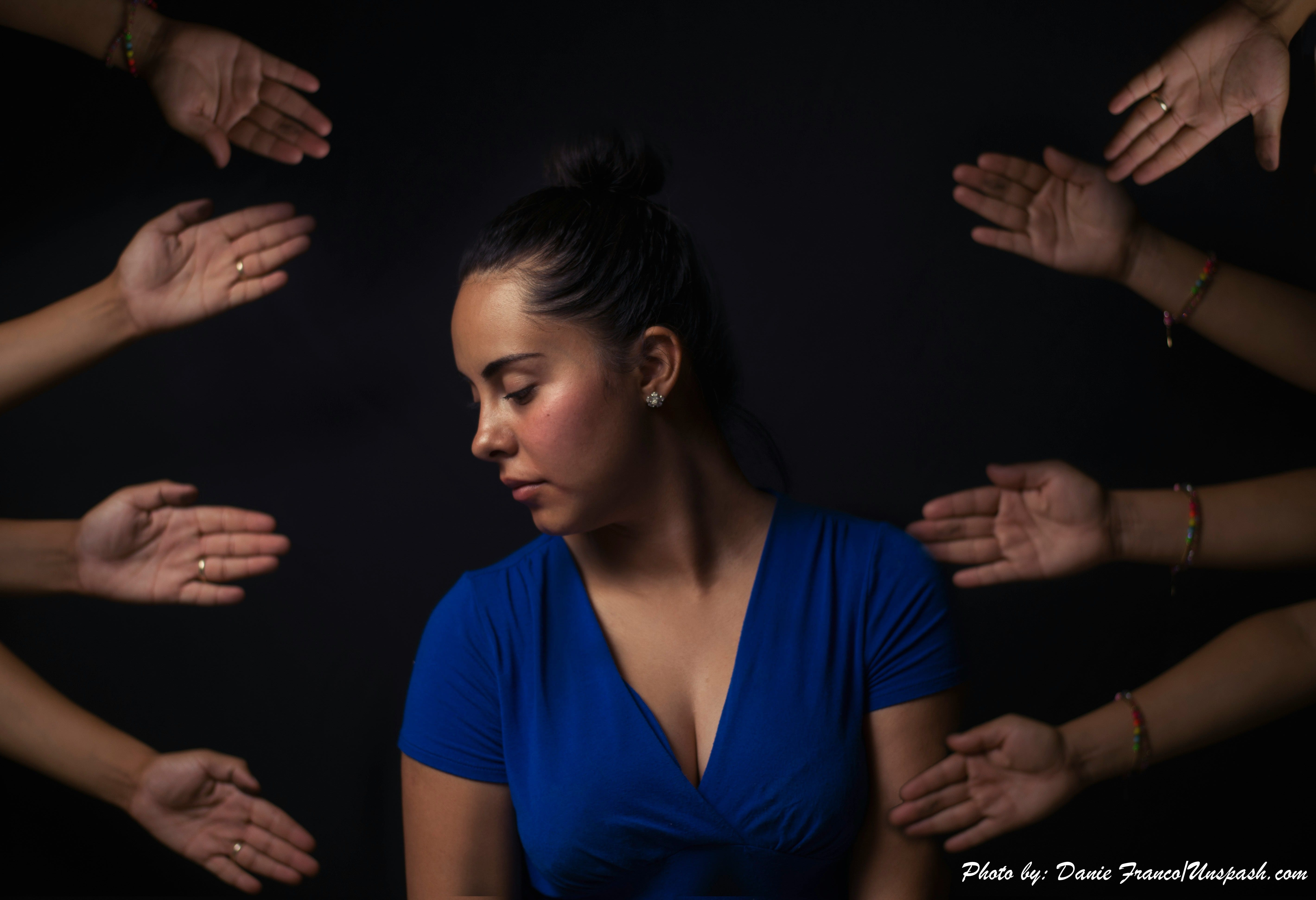
In my own little world, I fear:
I am not a good enough parent,
I am not financially astute enough,
I am not doing enough to serve my community.
I do not have enough forward momentum in my career.
I fear I will be stuck in overwhelm for the rest of my life.
On the dramatic side of things, I fear:
My kids will get cancer and die like their dad.
I am not a worthy human being.
Yes, these are real. But I fear I am not alone, either. I hear fear all the time on social media, read it in articles, and see it on the news. I also see it on the faces of the people I encounter in my community or overhear fear in conversations at the local coffee shop.
Fear is legitimate. Sometimes.
So, I ask myself: is this a valid fear I am experiencing, or one I’ve been conditioned into? Does this fear apply to me personally, my current life, or was this fear instilled into me, passed down from generation to generation, by my parents, and their parents, and their parents before that? Does this fear stem from my nervous system not feeling safe? Is it actually real? Or even necessary? Maybe the fear isn’t even ours. Maybe we are just borrowing it.
Borrowed fear is sneaky.
For years, I parented out of fear, fear of how my mother thought I was parenting. Fear that if she saw me giving in to my kid, she would think I was “doing it wrong.” This would snowball into a fear of rejection so powerful that I would blindside my kids with an (overly) harsh “no” to prove myself worthy of being a good enough parent. This was not just in front of her, but without her in the room, miles away! I would hear her voice echoing, “You’re doing too much for them.” So I would parent out of fear stemming from not being enough as a child, rather than from what I believed was right for myself and my own family.
But where did this fear stem from? Did she parent me out of fear that was imparted by her own mother as well?
Was I borrowing her fear?
It is not just the fear itself that is scary, but what these fears produce: guilt, anxiety, and shame associated with a fear around something that is happening in our world, or mostly in MY world, that we have no control over in the first place. This then creates a cascade of shoulds-
”I should do this…”
“We should do that…”
“I should have done more…”
producing, yet again, feelings of guilt and overwhelm.
Throughout my lifetime, I have been very impressionable. For a long time, I thought others knew more than I, so I would validate them over myself, gaslighting the crap out of my own thoughts, torching them to the ground. This is one of the biggest reasons I do not watch the news, use very little social media (except Substack!), and pay for YouTube Premium: to avoid spending every last dime on the latest and greatest.
Because I fear I will miss out if I don’t buy it!
See how this works? I am borrowing fear constantly. From this friend, or parent, or this advertisement, or from this statement on the news. As my sensitive, impressionable self, I find it all too much. So I limit my exposure.
Some would call this burying your head in the sand.
I call it remaining sane. Because if I’m a nervous wreck all the time, what will that produce in my home or the community around me?
In early 2020, my late husband was diagnosed with his first cancer: prostate cancer at forty-eight years old. At that time, the impact of this diagnosis and the state of the world during COVID was almost too much for him to bear. His anxiety levels were through the roof. He borrowed fear from articles about prostate cancer and its prognosis; he borrowed fears from everyone in the world talking about dying from COVID, but he also borrowed fears from himself and his past medical experiences.
For the first several weeks of quarantine, he was the only one leaving the house because his job as a plumber was on-site. It therefore made sense that he was the one to do the grocery shopping and run other errands, so we both wouldn’t be exposed to COVID. He would return from the store, panic-stricken, his face pale, dark circles under his eyes (and ten jars of peanut butter on each trip, which I figured out would have been his go-to food in an apocalypse…) from the stress of being in the world. A world that had shifted so drastically from normal to scary, and the fear was palpable!
So he borrowed fear from the grocery store, as he witnessed barren shelves from the obvious evidence of hoarding. He borrowed fear from his customers, who displayed anxiety when he had to enter their homes to check a water leak, or worse, from listening to news reports telling us how bad it was out there!
After one shopping trip in particular, where he came home, yet again, breathing heavily and distraught. I looked at him and said, “Stop listening to the news!” It was scary enough without the world's borrowed fears, and I needed my husband mentally and emotionally present with me in our home, with our kids, instead of heading toward a breakdown. A week later, sans news, he professed that he felt better in his abstinence. I believe his nervous system had a chance to finally catch up and calm down.
In any fearful situation, I ask myself:
“Is this fear real for me, or is this borrowed?”
This statement is a form of setting boundaries, which, in my opinion, is incredible self-care that produces the ultimate form of self-love. Setting boundaries in your environment and with the people you interact with, as well as within yourself (i.e., avoiding negative self-talk), is one of the most important ways to reclaim a calm nervous system and build self-trust.
THIS IS NOT EASY. But imperative.
When I feel fear in my body, which can happen at the most random times, I stop, place my hand on my heart, and breathe deeply and slowly, sometimes audibly saying, “I am safe.” I then pause to ‘listen to’ the emotions that rise up rather than push them away. Not gaslighting them into submission, but rather, getting curious and asking where they stem from, or better yet, where they really belong.
I have learned that in order to allow my emotions to be heard and actually become “energy in motion,” I need to flow with them, not against them.
It takes observing the emotions outside myself in the present moment, discerning their causes, gathering information to make a proper decision about how to handle the fear, and deciding whether they actually serve me for my greatest good.
This is extremely empowering!
And I am learning to take the time to do this every day. The more I make it a habit to listen to my own voice, instead of the fearful ones in my world, the more at peace I will become.
Look, there is plenty in this world to fear, without borrowing someone else’s.
Therefore, I will choose where to place my precious energy. And in this choosing, I plan to thrive.
Got fear? Sorry, I don’t need yours, too. But thanks for the offer. ;)
Love to all!
xoxo
jill
Thank you for sharing. I needed to read this! Big hugs my friend
Thank you f.